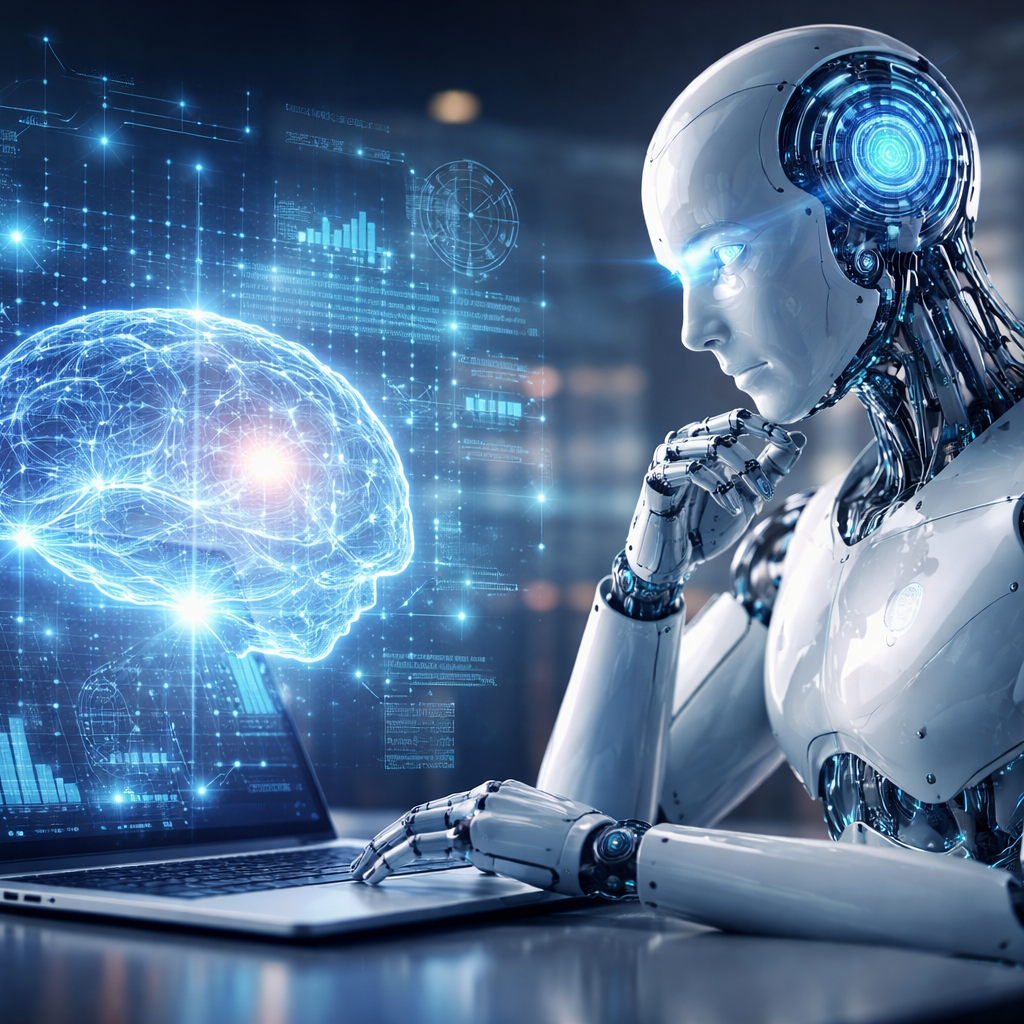
Artificial Intelligence (AI) is transforming industries worldwide, from healthcare to business automation.
Introduction
Artificial Intelligence (AI) is one of the most powerful technologies shaping the modern world. From healthcare and education to finance and transportation, AI is transforming industries and changing the way people live and work. Businesses are using AI to automate tasks, analyze massive amounts of data, and make smarter decisions faster than ever before.
Artificial Intelligence refers to computer systems that are designed to perform tasks that normally require human intelligence. These tasks include learning, reasoning, problem-solving, understanding language, and recognizing patterns. With the rapid development of machine learning and advanced algorithms, AI has become an essential tool for innovation and productivity.
In today’s digital age, AI is everywhere. Voice assistants, recommendation systems, self-driving cars, and chatbots all rely on artificial intelligence. As technology continues to evolve, AI will play an even bigger role in shaping the future of society.
What Is Artificial Intelligence?
Artificial Intelligence is a branch of computer science that focuses on creating machines capable of performing tasks that require human intelligence. AI systems are designed to learn from data, identify patterns, and make decisions with minimal human intervention.
There are several types of artificial intelligence:
1. Narrow AI
Narrow AI is designed to perform a specific task. Examples include voice assistants, facial recognition systems, and recommendation algorithms used by streaming platforms and online stores.
2. General AI
General AI refers to machines that can perform any intellectual task that a human can do. While this level of intelligence is still theoretical, researchers are working toward developing more advanced AI systems.
3. Super AI
Super AI is a concept where machines surpass human intelligence in every aspect. This includes creativity, emotional intelligence, and problem-solving abilities. Currently, this type of AI exists only in theory.
How Artificial Intelligence Works
Artificial Intelligence works by using algorithms and large datasets to train machines to recognize patterns and make decisions. The most common technologies used in AI include:
Machine Learning
Machine learning allows computers to learn from data without being explicitly programmed. By analyzing large datasets, machines can identify patterns and improve their performance over time.
Deep Learning
Deep learning is a subset of machine learning that uses neural networks inspired by the human brain. These networks can process large amounts of data and are commonly used in image recognition, speech recognition, and natural language processing.
Natural Language Processing
Natural Language Processing (NLP) enables machines to understand and interpret human language. This technology powers chatbots, translation tools, and voice assistants.
Applications of Artificial Intelligence
Artificial Intelligence is used in many industries to improve efficiency and solve complex problems.
AI in Healthcare
In the healthcare industry, AI is helping doctors diagnose diseases faster and more accurately. AI systems can analyze medical images, detect early signs of illness, and recommend treatment plans.
For example, AI-powered tools can identify cancer cells in medical scans and assist doctors in making more accurate diagnoses. AI is also used in drug discovery, helping researchers develop new medications more quickly.
AI in Business
Businesses use AI to automate processes, improve customer service, and analyze market trends. Chatbots are commonly used to answer customer questions and provide support 24/7.
AI also helps companies analyze large amounts of data to understand customer behavior and improve marketing strategies. This allows businesses to make better decisions and increase profitability.
AI in Education
Artificial Intelligence is transforming education by creating personalized learning experiences. AI-powered platforms can analyze student performance and adapt lessons to meet individual needs.
Students can learn at their own pace while teachers receive insights into areas where students need additional support.
AI in Transportation
AI is also revolutionizing transportation. Self-driving cars use artificial intelligence to detect obstacles, recognize traffic signs, and navigate roads safely.
Ride-sharing services and navigation apps also rely on AI to optimize routes and reduce travel time.
Benefits of Artificial Intelligence
Artificial Intelligence offers many benefits that improve efficiency, productivity, and decision-making.
Increased Efficiency
AI systems can perform repetitive tasks much faster than humans. This allows businesses to save time and focus on more strategic activities.
Better Decision-Making
By analyzing large amounts of data, AI can provide valuable insights that help organizations make better decisions.
Improved Accuracy
AI systems reduce the risk of human error, especially in fields like healthcare and finance where accuracy is critical.
Innovation and Growth
AI drives innovation by enabling the development of new products and services. Many companies rely on AI to stay competitive in a rapidly changing market.
Challenges of Artificial Intelligence
Despite its many advantages, AI also presents several challenges that must be addressed.
Job Displacement
Automation powered by AI may replace certain jobs, especially those involving repetitive tasks. However, AI is also expected to create new job opportunities in technology and data analysis.
Data Privacy
AI systems rely heavily on data, raising concerns about privacy and data security. Companies must ensure that personal information is protected.
Ethical Concerns
There are also ethical questions about how AI should be used. For example, decisions made by AI systems must be fair and unbiased.
The Future of Artificial Intelligence
The future of Artificial Intelligence looks extremely promising. Researchers are continuously developing more advanced AI technologies that will transform industries and improve quality of life.
In the coming years, AI will likely play a major role in areas such as: